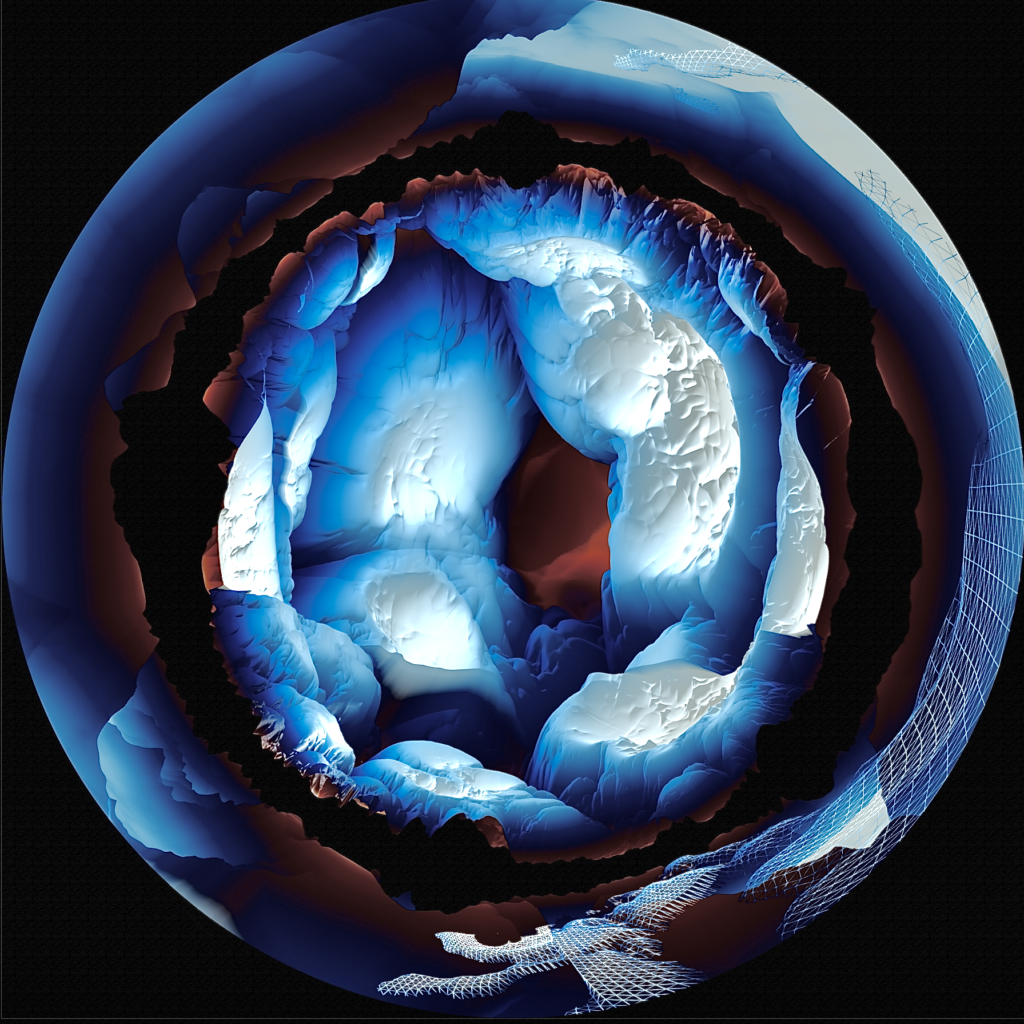
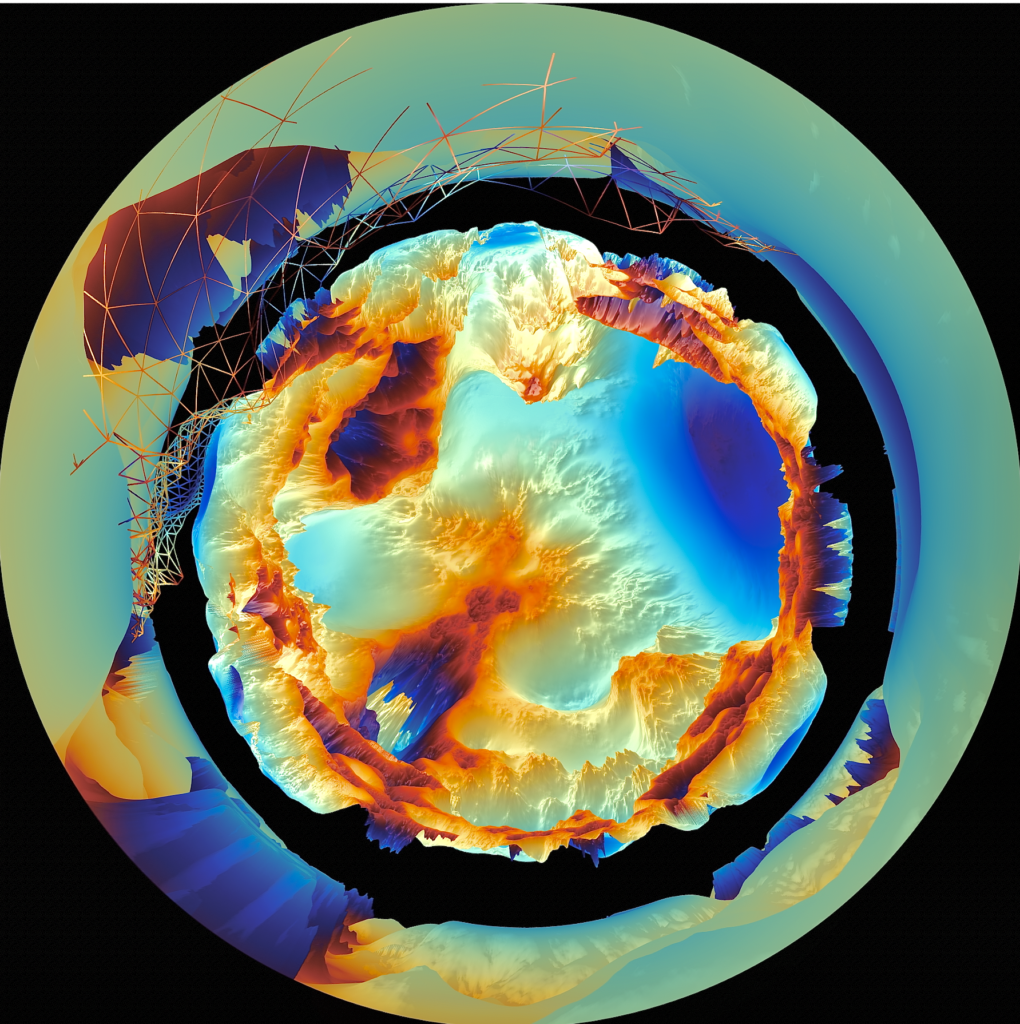
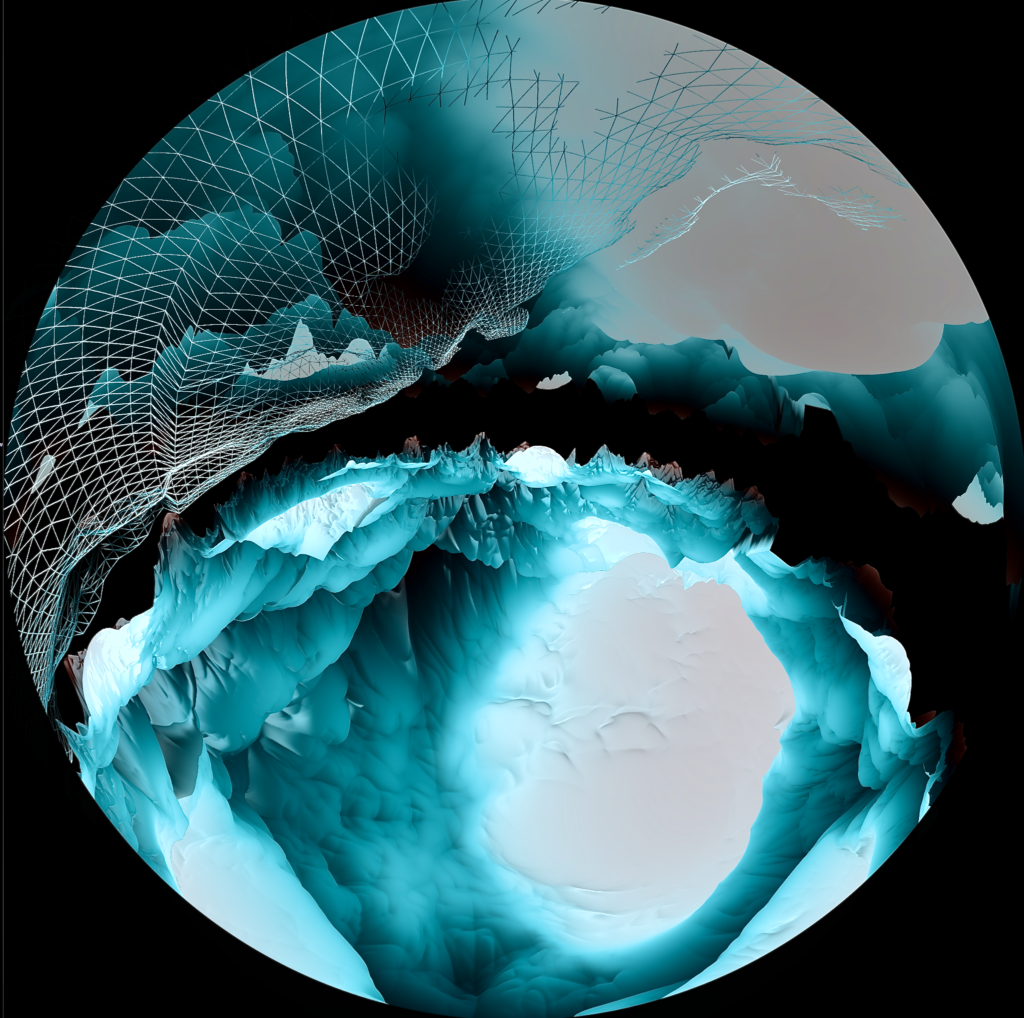
A Better World is a generative art series of Eric Raynaud designed using maxmsp that explores the concept of exo-worlds. These spherical planispheres represent imaginary worlds untouched by human influence. They question the paradox of a humanity that dreams of distant planets while struggling to preserve the unique ecosystem that sustains its own existence.
The project takes inspiration from the scientific pursuit of exoplanets. These distant worlds evoke both mystery and fascination. While we imagine them as potential new frontiers, they also reflect the fragility of our own planet. The series highlights the tension between the desire to explore and the need to protect.
Rather than portraying these worlds as conquests or future refuges, A Better World offers a more reflective approach. It challenges the colonial narratives often linked to space exploration. Through generative processes, the series deconstructs the myth of the untouched frontier. Instead, it invites viewers to think differently.
These digital landscapes act as a mirror to our own planetary home. They remind us of the delicate balance that makes life possible. In this way, the series becomes a call for awareness. It encourages us to rethink our relationship with the natural world.
Installation
This reflection naturally extends beyond the image itself and into the space in which it is experienced. From its earliest stages, A Better World was conceived not only as a visual series, but as an environment — one that situates the viewer within the very act of observation. The transition from generative image to immersive installation allows the project’s questions to shift scale, moving from representation to embodied perception.
From the research to the installation design, the project explores how modes of observation shape our understanding of distant worlds — and, by extension, our own.
The installation takes the form of an immersive dome measuring three meters in diameter. Its shape recalls astronomical observatories, structures dedicated to observing the sky and detecting exoplanets. The choice of a dome carries a dual significance: it echoes scientific practices of cosmic exploration while offering an allegorical reinterpretation of the place of observation itself.
Within this installation, the dome is transformed into an imaginary lens — like an extraordinarily powerful telescope or a fantastical porthole — allowing viewers to plunge directly into the universe of these fictional exoplanets.
Far from functioning as a simple observation device, the dome becomes a portal to speculative worlds, offering an immersive and poetic experience of astronomical discovery.