Spatialized sound installation
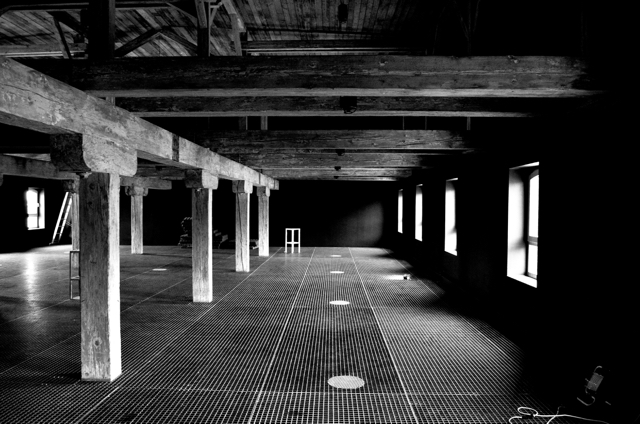
At the invitation of 4DSOUND and the Spatial Sound Institute, Éric Raynaud created an immersive spatial reinterpretation of Iannis Xenakis’ Persepolis (1971), designed specifically for the 4DSOUND diffusion system. A fundamentally spatial work, Persepolis relies on continuous sound saturation A fundamentally spatial work, Persepolis is based on continuous sound saturation and the constant recomposition of motifs distributed across several tracks, inviting the listener to lose their sense of time and space. Raynaud’s project consisted of extracting and reinterpreting this spatial dimension by exploiting the three-dimensional and dynamic diffusion capabilities of the 4DSOUND system.
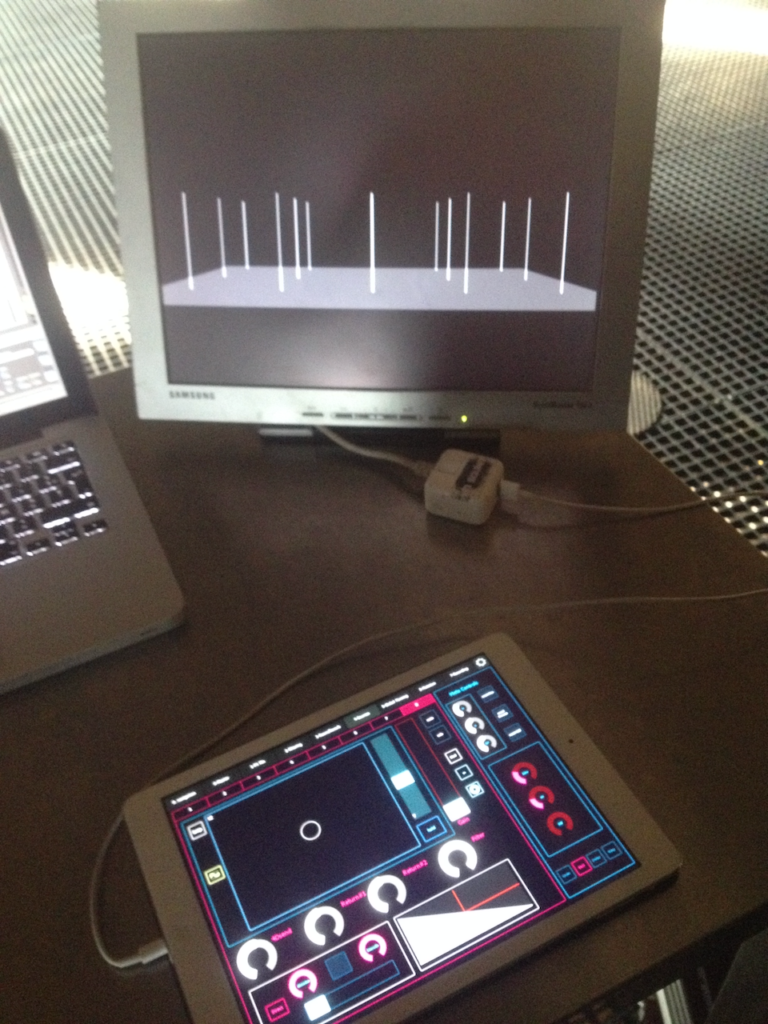
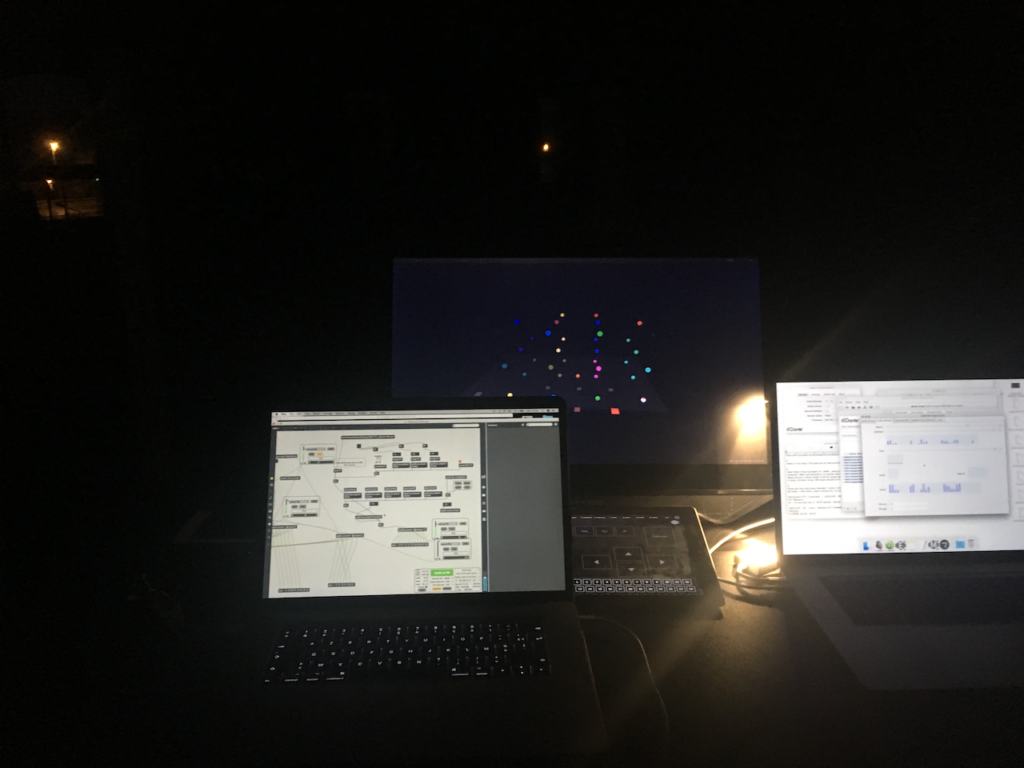
His work focused on two complementary axes: preserving Xenakis’ approach of “filling the space” with sound density, while highlighting the internal spectral richness of the piece. Spatialization is thus based not only on the position of the sources, but also on the frequency distribution and depth of the sound layers, making it possible to construct an immersive landscape that can be traversed. As part of this research, Éric Raynaud developed tools for real-time performance and spatialization in Max/MSP, integrating modules for frequency spatialization, granulation, spectral diffusion, and timbre transformation, controlled by an interface.
https://spatialsoundinstitute.com/Fraction-in-4DSOUND-2016